ad 1

Sunday, November 13, 2011

Amitabh Bachchan

Birth Name
Amitabh Harivansh Srivastav

Nickname
Big B
Munna
One Man Industry
Angry Young Man
Bollywood's Shahenshah
Amith
AB Sr.

Height
6' 2" (1.88 m)

Mini Biography
Son of well known poet Harivansh Rai Bachchan and Teji Bachchan. He has a brother named Ajitabh. He completed his education from Uttar Pradesh and moved to Bombay to find work as a film star, in vain though, as film-makers preferred someone with a fairer skin, and he was not quite fair enough. But they did use one of his other assets - his deep baritone voice - which was used for narration and background commentary. He was successful in being cast in Saat Hindustani. He got his break in Bollywood after a letter of introduction from the then Prime Minister Mrs. Indira Gandhi, as he was a friend of her son Rajiv Gandhi. This is how Amitabh made an entry in Bollywood, starting with Zanjeer, co-starred with his future wife-to-be Jaya Bhaduri, and since then there has been no looking back. He married Jaya Bhaduri, an actress in her own rights, he has two kids, Shweta and Abhishek. Shweta has been married, lives a non-filmy life and has a child. Being friends with Rajiv Gandhi, got him to decide to run for seat in the Congress from his hometown but had to leave midterm because of controversies, particularly after Rajiv and he were implicated in the now infamous "Bofors" case along with the U.K. based Hinduja Brothers. After a four year break, he was back in the unsuccessful Mrityudaata (1997), a comeback which the actor wanted to forget. Critics written him off but his career was saved with Bade Miyan Chote Miyan (1998). But four flops in 1999 and incurring debt of over 90 Crores rupees of his sinking company ABCL saw him at an all-time low. To make matters worse, after the defeat of the Congress party, Amitabh lost considerable political support, the opposition made him a target, and his credit rating deteriorated to such an extent that a leading nationalized bank, Canara Bank, sued him for outstanding loans. He did bounce back, presenting the Indian version of Who Wants To Be A Millionaire called "Kaun Banega Crorepati?" (2000). After a series of hits with Mohabbatein (2000), Kabhi Khushi Kabhie Gham... (2001) and Baghban (2003) and his most recent Khakee (2004), a 60 plus Bachchan is showing no signs of slowing down and proving the critics wrong once again.

His son Abhishek is also an actor by his own rights. Amitabh and Jaya were interested in getting Abhishek married to Karishma Kapoor, the daughter of Babita and Randhi Kapoor, they went through a formal engagement, but later broke it off.

The former Miss World and Bollywood actress, Aishwarya Rai, and Abhishek, were formally engaged on Sunday January 14, 2007, at the Bachchan residence in Juhu, Bombay, with the marriage taking place at the Bachchan residence on April 20, 2007.

Currently, he is one of the most busiest actors and singers in Bollywood as well as on TV, as can be seen from the commercials that he appears on, especially on Sahara One. Looks like there are no limits for this super-star and once the "Angry Young Man". of Bollywood.
IMDb Mini Biography By: rAjOo (gunwanti@hotmail.com)

Mini Biography
The trademark deep baritone voice, the tall, brooding persona, and intense eyes, made Amitabh Bachchan the ideal "Angry Young Man" in the 1970s, thereby changing the face of Hindi cinema. The son of the late poet Harivansh Rai Bachchan and Teji Bachchan, he was born in Allahabad in Uttar Pradesh. After completing his education from Sherwood College, Nainital, and Kirori Mal College, Delhi University, he moved to Calcutta to work for shipping firm Shaw and Wallace. Later, he moved to Bombay and struggled for a while to get his foot in the door of the Hindi film industry. The lanky, dark, and intensely brooding persona did not go down well with directors who were looking for wise-cracking, fair, loverboys - the trademark of the Indian hero in the 1960s. Starting with the low key Saat Hindustani, Bachchan struggled through many roles and was relegated at times to doing voice-overs and in one instance playing a deaf-mute (his deep baritone voice might have overshadowed the other actors!). He broke through with Zanjeer (the Chain) in 1973 playing opposite his real-life love interest and future wife Jaya Bhaduri. His persona seemed apt for the 1970s, capturing the resentment of underemployed youth and the increasing cult of violence. Bachchan reworked the image of the Hindi film hero with major hits like Deewar, Sholay, Trishul, Don, Kala Patthar, and Shakti. Adapting former screen idol Dilip Kumar's mannerisms and adding his own flamboyance, he popularized the violent melodrama. He proved that he had an equal flair for tragedies (Deewar, Muqaddar Ka Sikandar, Shakti) and comedies (Chupke Chupke, Don, Naseeb, Amar Akbar Anthony) as well. His most memorable performance was as the renegade against a harsh society in Deewar. After Amar Akbar Anthony in which he reveled in the role of the Cathlolic bootlegger - he played similar "masala" roles, movies that required action, comedy, tragedy, and romance in one character. This had disastrous consequences later with movies disintegrating into Amitabh variety shows rather than plot-driven stories. Bachchan was dubbed the Superstar, taking over that title from Rajesh Khanna, something he hung on to until the mid 1980s when the floor widened after his temporary departure. At the height of his popularity he was injured in an accident while shooting for the film Coolie - long lines of people prayed for his recovery at the Breach Candy hospital, underscoring his megastar status. He left films in 1985 to become a Member of Parliament from Allahabad constituency as a Congress party candidate, as a favor to his family friend Rajiv Gandhi - the new Prime MInister of India. A report of involvement in financial irregularities (of which he was completely cleared later) made him decide to step down as MP. His return in 1987 was lukewarm as the Hindi film industry had moved on and newer, younger heroes essayed the part of Angry Young Man with more conviction. Bachchan seemed to have lost his heart in making films as his later roles did not show the flicker of passion that had marked earlier efforts in the 1970s. In 1989, for the first time since 1976, three of his films were flops i.e. they could not recover their money (in the Hindi film industry a flop is a film that does not recover a distributor's price, not the producer's cost). A series of lackluster films in the 1990s pointed to a long overdue exit, common to many other stars. A seemingly well-thought out venture to start a production company ABCL landed him in immense debts. Astonishingly, he burst back with a double act: one, playing the stern patriarch (the kind against which he had rebelled in the 1970s but which role was suited to his gravelly voice), and two, reinventing himself as a brand that in turn, could market anything. He began the latter by hosting the Indian version of Who Wants to Be a Millionaire (Kaun Banegaa Crorepati) and is now back in demand for endorsements, advertisements as well as many movie roles. At sixty plus, Amitabh Bachchan is a greater icon than he was at the height of his popularity three decades ago. His son, Abhishek is considered a talented actor who has not yet broken out as a star.
IMDb Mini Biography By: darashukoh

Mini Biography
Amitabh Bachchan was born on October 11, 1942 in Allahabad. He is the son of late poet Harivansh Rai Bachchan and Teji Bachchan. Amitabh Bachchan did his schooling from Sherwood College, Nainital and later on pursued a degree in science from the Delhi University. His first job was in Shaw Wallace and later worked as a freight broker for a shipping firm called Bird and Co. But his destiny had something else to offer and it was the journey to stardom. He made his debut in the film Saat Hindustani (1969) which was directed by K.A. Abbas. Film failed on the box-office but Amitabh was noticed by film makers like Hrishikesh Mukherji and Sunil Dutt. Hrishikesh Mukherji (whom Amitabh treat as his Godfather),gave him a role in his two films, Anand and Guddi. Anand was the third film, which became a hit and he got best supporting actor filmfare award. Amitabh was getting the roles but they were not significant. Finally he got a chance to work in "Zanjeer", role for which he was not the first choice. Film turned out to be super-hit. By then a new avatar had emerged on silver screen, an "Angry young man". But this was his one aspect. He was a poet (Kabhi Kabhi), an decent professor (Kasme Vaade), a comedian (Chupke Chupke, Amar Akbar Anthony, Don), a dying lover (Mukaddar Ka Sikander).He did almost all kinds of roles. In 1973, after release of Zanjeer, Amitabh got married with Jaya Bhaduri. He became father at the time of release of Chupke Chupke. During the shooting of "Coolie" on 26th July 1982, he was injured and admitted to Breech Candy hospital. The whole nation prayed for his fast recovery and by the grace of God he was gifted with a new life. Mrs. Indira Gandhi, then P.M. of India, postponed her foreign trip and visited the hospital. After recovery Amitabh returned on silver screen, with Sharabi and Giraftar like hit movies. In the original script of "Coolie" Iqbal (Amitabh) had to die but Teji Bachchan asked Manmohan Desai to change it for her personal reasons. The last scene where he stands in the balcony and thank the people, was the real scene, a way to thank the people of India, "Main to chala gaya tha, laut aaya hoon to bus aapki duaon se...." Amitabh also tried his hand in politics in 1984 after the death of Mrs. Gandhi. He defeated the then called Chankya of the Indian politics, Hemvanti Nandan Bahuguna. But some how things went wrong and he got trapped in the dirty game of politics of anti-Rajiv Gandhi. Although during this period his classics "Main Azad Hoon" and "Agneepath" were released, but Amitabh was getting older. Amitabh decided to take a break in 1992, Khuda Gawah was the last release. He then launched ABCL which was a multi-faceted commercial enterprise. This was the major failure and he was surrounded by unthinkable debt. This is hard to imagine at that time how he survived but again he proved that he is not an ordinary man who live and die. With "Kaun Banega Crorepati" and "Mohabattein" he redefined his position in Indian cinema. Amitabh emerged again as a winner and slapped the critics who declared him "finished". Even in this age roles are written for him. Every film maker is dreaming to cast him in his/her film. He was declared as Star of the Millenium by BBC poll, by Stardust and even at the survey for statue at Madam Tusad. These are not mere coincident! May God bless him.
IMDb Mini Biography By: gavin (gunmasterM@hotmail.com)

Spouse
Jaya Bhaduri (3 June 1973 - present) 2 children

Trade Mark
His baritone voice

Trivia
Arguably India's greatest ever superstar.
He launched a multi-faceted commercial enterprise known simply as Amitabh Bachchan Corporation Limited, or ABCL. ABCL is engaged in production, distribution and all other aspects of the movie industry.
Had a very close association with the former Indian Prime Minister Indira Gandhi and her son Rajiv Gandhi (also Prime Minister) and he was elected to parliament with a huge majority from his home town of Allahabad. But his stint in politics did not last long and he was implicated in the infamous Swedish Bofors Gun deal scandal along with Rajiv Gandhi, the U.K. based Hinduja brothers, and others.
Was one of the judges for the 1995 Miss World beauty pageant.
While filming Coolie (1983/I) he received a near fatal injury. He was hospitalised and the Indian press issued daily bulletins on his health.
Was a former stage actor, radio announcer and freight company executive in Calcutta, India.
Went to Sherwood College, a boarding school in the hill-station town of Nainital, and from there to Delhi University where he earned a double MA degree.
When he was just trying to get a break in movies he was told to soften his 'deep' voice. However it was soon realised that his deep rich voice was excellent for narration. He has provided narrations for several films.
Suffered from a rare muscular disorder known as myasthenia gravis.
Father of Abhishek Bachchan
Is a vegetarian
Presenter of Kaun Banega Crorepati, India's version of Who Wants to be a Millionaire
The first Asian actor having a wax model of his likeness displayed at Madame Tussaud's in London, UK
Once the highest paid Bollywood actor in the film industry.
Was named Actor of the Millennium in a BBC News Poll ahead of such luminaries as Charlie Chaplin, Sir Lawrence Olivier, and Marlon Brando.
Was considered 'finished' in the late nineties after super star status for 20 years, a string of flops and failed political and business ambitions. But made an unexpected comeback as host of the popular TV quiz series "Kaun Banega Crorepati?" (2000) which put him right back on the number one spot of Bollywood actors over 40, reaffirming his reputation as the living legend of Indian cinema with a new series of high profile films (Mohabbatein (2000), Kabhi Khushi Kabhie Gham... (2001) etc.)
Formed a popular screen couple with Rekha
He also sung in many movies such as Laawaris, Toofan and Silsila.
Became a grandfather in 1997 when his daughter Shweta gave birth to a daughter, Navya Naveli Nanda.
Works with the Indian government's media campaign to publicize the National Immunization Days and encourage people to take their children to be vaccinated against polio and other deadly diseases.
Son of Harivansh Rai Bachchan, who passed away in January 2003.
Suffers from asthma.
His favourite screen name is Vijay, which he had as his character name in over 20 movies.
His father Harivansh Rai Bachchan was considering naming him 'Inquilab' (which means 'revolution') before settling down for Amitabh which means 'brilliance unlimited'.
On his 61st birthday, he relaunched ABCL as AB Corp. ABCL had to be closed after debts of more than millions of rupees. However, Amitabh has decided to relaunch it with a name change.
Actress Nirupa Roy is mostly cast as his mother and last time she featured was in Lal Baadshah (1999).
Has a double M.A. (Master of Arts) degree.
The facial caricature of the Indian comic book character 'Supremo' is based upon him.
Following a near fatal accident while shooting Coolie (1983/I), during which he suffered internal bleeding and required 17 bottles of blood, he became a champion for the cause of encouraging more people to donate blood.
Singer Sudesh Bhonsle dubs his voice for playback songs in many movies.
At the age of 58, he jumped from a height of 30 feet, along with co-star Manoj Bajpai, for his 2001 movie Aks (2001).
In 1996, he released an album called "Aby Baby". This album was released under ABCL and featured songs like "Eer Bir Phatte" and remixes of his songs from his early movies "O Saathi Re" and "Kabhi Kabhi". "Eer Bir Phatte" was inspired by one of his famous dialogues in his movie _Adalat (1976/I)_.
In 1984, he was honored by the Indian government with the Padma Shri Award for his outstanding contribution to the Hindi film industry.
He is the only actor who achieved at least one hit every year for 15 consecutive years - from 1972 in Bombay to Goa (1972) to 1986 in Aakhree Raasta (1986).
He has played double and triple roles in a number of films. His double role starrers include _Adalat (1976/I)_, Don (1978), Kasme Vaade (1978), The Great Gambler (1979), _Bemisaal (1982)_, Desh Premee (1982), Satte Pe Satta (1982), Aakhree Raasta (1986), Toofan (1989), Bade Miyan Chote Miyan (1998), Lal Baadshah (1999) and Sooryavansham (1999). Mahaan (1983) had the superstar in a triple role.
He was closely associated with Indira Gandhi, the former Indian Prime Minister, and her son, Rajiv Gandhi. It was Mrs. Gandhi who wrote a letter of introduction for Amitabh, and that's how he got his break in Bollywood.
He was the original choice to play a role in Aapko Pehle Bhi Kahin Dekha Hai (2003), which he declined and was finally played by Om Puri
His survival and his success could in short be termed best in his wife's own words that "Amit ji is a loner !"
Although Amitabh Bachchan's Immaan Dharam (1977) proved to be a disaster, the producer went ahead and announced Asmaan with Dharmendra, Amitabh Bachchan and Rekha, with Mohan Kumar in the director's seat. Salim-Javed, who had penned the script of Immaan Dharam, were scripting Asmaan as well. However, the film was shelved subsequently.
Rakesh Kumar, who had directed Khoon Pasina (1977), Mr. Natwarlal (1979), Do Aur Do Paanch (1980) and Yaarana (1981), had turned producer and announced Charlie, with Amitabh Bachchan enacting the title role. Padmini Kolhapure had been cast opposite the Big B. However, the project never got made.
Amitabh Bachchan and Dilip Kumar were seen on screen for the first time in Ramesh Sippy's Shakti (1982). But much before Shakti happened, Eagle Films had signed Dilip Kumar, Amitabh Bachchan and Amjad Khan for their new project, which was to be directed by Yash Chopra. However, the project did not materialize subsequently.
In 1976 Amitabh Bachchan was to star in Manoj Kumar's Naya Bharat, alongside Amitabh it was also supposed to star Manoj Kumar, Hema Malini, Rajesh Khanna, Shashi Kapoor, Shatrughan Sinha, Zeenat Aman and Rishi Kapoor. The film was shelved subsequently.
Amitabh Bachchan, Parveen Babi, Mithun Chakraborty and Rati Agnihotri were teamed in Tala Chabi, produced by Romu Sippy and directed by Raj N. Sippy. One of the foremost character actors then, Pran, had been signed to enact the main villain's role. An official announcement was made in April 1982. The movie never took off.
Amitabh Bachchan was supposed to play one of the lead roles in Shashi Kapoor's Utsav (1984) however; Amitabh opted out of the film. Shashi Kapoor replaced him.
Amitabh Bachchan was the first choice of Rakesh Roshan's King Uncle (1993). But since the actor wasn't signing films then, Roshan opted for Jackie Shroff.
Prakash Mehra was planning on making Chankaya Chanddragupta and had signed Amitabh Bachchan for the main role. The movie was shelved.
Vidhu Vinod Chopra wanted Amitabh Bachchan to play the lead role of Inspector Inayat Khan in Mission Kashmir (2000). The reason why Amitabh Bachchan declined the role was because of his commitment to Yash Chopra's Mohabbatein (2000).
Kader Khan wanted to direct him as the lead hero in Jaahil, unfortunately the movie was never made.
He hates the word Bollywood, the word that describes the Hindi film industry.
Is teetotal
On 31 October 2006, he shocked the unit of a forthcoming movie Shootout at Lokhandwala by recording 23 scenes in 5 hours. Achieving this feat was unheard of.
His daughter, Shweta, is married to Nikhil Nanda, who is the grandson of Raj Kapoor. (Raj Kapoor's daughter, Ritu, took on the last name of Nanda when she married Rajan).
His daughter, Shweta, was born on March 17th.
His mom, Teji Bachchan, passed away in Lilavati Hospital, Mumbai, Maharashtra, India on December 22, 2007, after a prolonged illness, at the age of 93.
Has a mannequin of himself in Madam Tussaud's Museum in England. Along with Shahrukh Khan, Aishwariya Rai Bachchan and Salman Khan.
Suffers from vitiligo.
In the 2008 movie, Slumdog Millionaire, Amitabh Bachchan is the answer to Jamal's first question in the Indian version of Who Wants To Be A Millionaire? The question: Who was the star in the 1973 hit film Zanjeer? Through Jamal's flashbacks we get to see Amitabh Bachchan in action.

Personal Quotes
I have never really been confident about my career at any stage.
Everyone must accept "that we will age and age is not always flattering".
I wish I had time to learn all the languages of our country, I wish I knew how to play a musical instrument. There are many things that I feel I have missed out on.
(Referring to Abhishek Bachchan) "Like any other father I feel proud to see my son on the silver screen."
(When asked about his dancing with Shilpa Shetty in Lal Baadshah (1999)) "But I would dance with my daughter if I could. And if I can dance with Shilpa Shetty, then I will do that."
I have never been a superstar and never believed in it.
"The amount of things I have been through and the remarkable ways in which the body has reacted is just phenomenal. No wonder I became religious, because you don't know why something's happening to you and you don't know how you bounced back."
His thoughts on working in Hollywood: "You don't see Indians in Hollywood films around which a story can revolve. As soon as we have a social presence in your society, I am sure there will be many actors from our part of the world that will be acting in Hollywood films. I have always been a great admirer of Marlon Brando, Al Paccinno, Robert De Niro. I would love to walk into the frame, hold their briefcase!"

Our star MJ


worlds no one rockstar..


Michel jackson


Michael Jackson


Michael Joseph Jackson (August 29, 1958 – June 25, 2009) was an American recording artist, entertainer, and businessman. Referred to as the King of Pop, or by his initials MJ, Jackson is recognized as the most successful entertainer of all time by Guinness World Records. His contribution to music, dance, and fashion, along with a much-publicized personal life, made him a global figure in popular culture for over four decades. The seventh child of the Jackson family, he debuted on the professional music scene along with his brothers as a member of The Jackson 5, then the Jacksons in 1964, and began his solo career in 1971.
In the early 1980s, Jackson became a dominant figure in popular music. The music videos for his songs, including those of "Beat It", "Billie Jean", and "Thriller", were credited with transforming the medium into an art form and a promotional tool, and the popularity of these videos helped to bring the relatively new television channel MTV to fame. Videos such as "Black or White" and "Scream" made him a staple on MTV in the 1990s. Through stage performances and music videos, Jackson popularized a number of dance techniques, such as the robot and the moonwalk, to which he gave the name. His distinctive musical sound and vocal style have influenced numerous hip hop, pop, contemporary R&B, and rock artists.
Jackson's 1982 album Thriller is the best-selling album of all time. His other records, including Off the Wall (1979), Bad (1987), Dangerous (1991), and HIStory (1995), also rank among the world's best-selling. Jackson is one of the few artists to have been inducted into the Rock and Roll Hall of Fame twice. He was also inducted into the Dance Hall of Fame as the first (and currently only) dancer from the world of pop and rock 'n' roll. Some of his other achievements include multiple Guinness World Records; 13 Grammy Awards (as well as the Grammy Legend Award and the Grammy Lifetime Achievement Award); 26 American Music Awards (more than any other artist, including the "Artist of the Century"); 13 number-one singles in the United States in his solo career and the estimated sale of over 750 million records worldwide. Jackson won hundreds of awards, which have made him the most-awarded recording artist in the history of popular music.
Aspects of Jackson's personal life, including his changing appearance, personal relationships, and behavior, have generated controversy. In 1993, he was accused of child sexual abuse, but the case was settled out of court and no formal charges were brought. In 2005, he was tried and acquitted of further sexual abuse allegations and several other charges after the jury found him not guilty on all counts. While preparing for his concert series This Is It, Jackson died of acute propofol intoxication on June 25, 2009, after suffering from cardiac arrest. Before his death, Jackson had been administered drugs including propofol and lorazepam. The Los Angeles County Coroner declared his death a homicide, and his personal physician was convicted of involuntary manslaughter in 2011. Jackson's death triggered a global outpouring of grief, and as many as one billion people around the world reportedly watched his public memorial service on live television. In March 2010, Sony Music Entertainment signed a $250 million deal with Jackson's estate to retain distribution rights to his recordings until 2017, and to release seven posthumous albums over the decade following his death.[4]

Population Explosion in India


INTRODUCTION:

    Is population explosion a boon or a curse? For the European developed countries like Spain and Italy, where the population is decreasing, this might be considered as a boon. However, for the developing countries like India, population explosion is a curse and is damaging to the development of the country and it’s society. The developing countries already facing a lack in their resources, and with the rapidly increasing population, the resources available per person are reduced further, leading to increased poverty, malnutrition, and other large population-related problems.
    The literal meaning of population is “the whole number of people or inhabitants in a country or region” (Webster’s dictionary), and the literal meaning of population explosion is “a pyramiding of numbers of a biological population” (Webster’s dictionary).As the number of people in a pyramid increases, so do the roblems related to the increased population. The main factors affecting the population change are the birth rate, death rate and migration. The birth rate is the ratio between births and individuals in a specified population and time (Miller, 253). The death rate is the ratio between the number of deaths and individuals in a specified population and time (Miller, 253). Migration is the number of people moving in (immigration) or out (emigration) of a country, place or locality. The population change is calculated by the formula:
Population change = (Births + Immigration) – (Deaths + Emigration)
    The recent increase in the world population has been caused due to the following major reasons:
  1. The increase in birth rates due to medical improvements
  2. The decrease in death rates due to better medical facilities and advancements in the field of medicine.
  3. Immigration to better developed countries due to several reasons like better job opportunities, war, and natural causes like hurricanes, earthquakes, and so forth.
    India, being a developing country, has had to face several economic and political challenges. One of the most important problems is the population explosion. According to Geography.com.sg, “India's population hit 1 billion in May 2000, increasing the urgency for the country to moderate its population growth.” Some of the reasons for this population explosion are poverty, better medical facilities, and immigration from the neighboring countries of Bangladesh and Nepal.The population density of India in 1996 was about 287 persons per square kilometer (Encyclopedia Britannica, Internet). Several solutions to decrease the rate of population increase have been tried by the government, some successful, some unsuccessful. Although the rate of increase has decreased, the rate has not reached the satisfactory level yet.The population in India continues to increase at an alarming rate. The effects of this population increase are evident in the increasing poverty, unemployment, air and water pollution, and shortage of food, health resources and educational resources.
REASONS FOR INCREASE IN POPULATION:
  1. BIRTH RATE
    1. Poverty
          According to ABC News, India currently faces approximately “… 33 births a minute, 2,000 an hour, 48,000 a day, which calculates to nearly 12 million a year”. Unfortunately, the resources do not increase as the population increases. Instead the resources keep decreasing, leading to making survival for a human being more and more competitive even for the basic necessities of life like food, clothing and shelter.
          India currently faces a vicious cycle of population explosion and poverty. One of the most important reasons for this population increase in India is poverty. According to Geography.com, “More than 300 million Indians earn less than US $1 everyday and about 130 million people are jobless.” The people, who have to struggle to make two ends meet produce more children because more children mean more earning hands.Also, due to poverty, the infant mortality rate among such families is higher due to the lack of facilities like food and medical resources. Thus, they produce more children assuming that not all of them would be able to survive. The end result is a mounting increase in the population size of India. Due to the increase in population, the problems of scarce resources, jobs, and poverty increases. Thus the cycle continues leading to an ever-increasing population that we see today. This cycle in fact might be considered as a positive feedback, in that the increase in one results in the increase of the other factor. As the poverty and the population both increase, the development of the country and the society seems even more far-fetched.

    2. Religious beliefs, Traditions and Cultural Norms
          India’s culture runs very deep and far back in history. Due to the increased population, the educational facilities are very scarce. As a result, most people still strictly follow ancient beliefs. According to ABC News, the famous Indian author, Shobha De said, “God said ‘Go forth and produce’ and we just went ahead and did exactly that.” In addition, a lot of families prefer having a son rather than a daughter. As a result, a lot of families have more children than they actually want or can afford, resulting in increased poverty, lack of resources, and most importantly, an increased population.
          Another one of India’s cultural norms is for a girl to get married at an early age. In most of the rural areas and in some urban areas as well, families prefer to get their girls married at the age of 14 or 15. Although child marriage is illegal in India, the culture and the society surrounding the girls in India does not allow them to oppose such decisions taken by their family. For many, giving a girl child in marriage is done not by choice, but rather out of compulsion. The poor economic status of tribal villagers is attributed as one of the primary factors responsible for the prevalence of child marriages in India. An example of one such incident was reported in Indiainfo.com. According to an article written by Syed Zarir Hussain on October 16th, 2000, “Forty-two-year-old Rojo Tok, a tribal peasant in Arunachal Pradesh, was all decked up in local finery to wed Mepong Taku, a girl who will turn 14 this winter.”
          I was brought up in a very different environment and never had to worry about getting married at the age of 14 or 15. However, my parents turned their eyes away, when my maidservant’s daughter was being married off when she was only 13 years old. I was very young, but my parents simply said, “That’s just how things are with poor people” and I did not have a say in it. Due to the young age of these girls, they have more potential of bearing children, that is, since they start bearing children at a very early age, they can have more children throughout their lifetime. This results in the increase of the global fertility rate. Since these girls get married at a very early age, they do not have the opportunity to get educated. Therefore, they remain uneducated and teach the same norms to their own children, and the tradition goes on from one generation to the other.

  2. DEATH RATE:
        Although poverty has increased and the development of the country continues to be hampered, the improvements in medical facilities have been tremendous. This improvement might be considered positive, but as far as population increase is considered, it has only been positive in terms of increasing the population further. The crude death rate in India in 1981 was approximately 12.5, and that decreased to approximately 8.7 in 1999. Also, the infant mortality rate in India decreased from 129 in 1981 to approximately 72 in 1999 (Mapsindia.com, Internet). These numbers are clear indications of the improvements in the medical field.This development is good for the economy and society of India, but strictly in terms of population, this advancement has further enhanced the increase in population.
        The average life expectancy of people in India has increased from 52.9 in 1975-80 to 62.4 in 1995-00. Although our near and dear ones would live longer, due to the increase in the population, the resources available per person would be much less, leading to a decrease in the curvature of the slope of development instead of a higher gradient. In addition, abortion is not allowed by several religions that are followed in India. In fact, in Islam, one of the leading religions of India, children are considered to be gifts of God, and so the more children a woman has, the more she is respected in her family and society. As a result, although the measures to control birth are either not available or known to the public, the facilities to increase birth through medical facilities are available.

  3. MIGRATION:
        In countries like the United States (U.S.), immigration plays an important role in the population increase. However, in countries like India, immigration plays a very small role in the population change. Although people from neighboring countries like Bangladesh, Pakistan and Nepal, migrate to India; at the same time Indians migrate to other countries like the U.S., Australia, and the U.K. During the 1971 war between India and Pakistan over Bangladesh, the immigration rate increased tremendously. However, currently the migration in India is –0.08 migrants per 1000 population (AskJeeves.com, Internet), and is decreasing further. This is definitely good for India. This way, the population might eventually come close to being under control and more people may get better job opportunities and further education. For example, the students in my university from India, like myself, have better chances for job opportunities and better education outside India than we would have had in India.


EFFECTS OF POPULATION EXPLOSION:
    The current rate of population growth in India is 1.58% and the total fertility rate is 3.11 (AskJeeves.com, Internet).Although the total fertility rate has decreased, due to the increase in the total number of women between the ages of 15 and 44 (reproductive ages), the total number of births has increased. This has lead to the current enormous population size of approximately 1 billion. This has greatly hampered the development of the Indian economy. The amount of resources that could have been available to one person a few years ago now need to be shared between two people, which is not sufficient for either of them. The population increase has lead to air and water pollution, unemployment, poverty, lack of educational resources, and even malnourished women and children.
  1. Air Pollution:
        The technological development of India has lead not only to medical advancements, but also to an increase in the number of factories. That has lead to air and water pollution. More energy needs to be produced to power these factories. When fossil fuels - the world's major source of energy - are burnt, gases are added to the atmosphere. Many cities in India have crossed the limits of suspended particulate matter, sulfur dioxide, and other pollutants due to vehicular and industrial emissions. According to an article by the World Bank Organization, Delhi, the capital of India is one of the world’s most polluted cities. In fact, in 1999, the average total suspended particulate (TSP) level in Delhi was 378 micrograms per cubic meter – approximately five times the World Health Organization’s (WHO) annual average standard. Furthermore, TSP levels in Delhi exceeded the WHO 24-hour standard on 97 percent of all days on which readings were taken.
        As the population grows, more and more forests are cleared. The two most common reasons for deforestation are to make houses for increased number of people to live in, and to use wood as a fuel in the industries. As a result, the trees that help us in reducing the air pollution through the process of photosynthesis are not able to do so any more. According to an article published in the Times of India on March 25th, 2000, “…increasing air pollution level in the year 1999, caused 3,650 untimely deaths and about 1,545,003 persons had been reportedly suffering with air (polluted) borne diseases.” Some of the diseases caused by air pollution are “respiratory diseases, asthma, chronic obstructive pulmonary disease, cardiovascular disease and cancer of the lung” (World Health Organization, Internet). Due to the tropical climate of India, air pollution also causes smog which may result in headaches, dizziness, breathing difficulties, or even mass illness due to carbon monoxide. This slow murder goes unnoticed because people die of diseases like cancer, asthma, and heart problems after long exposures to deadly air pollutants.
        Besides the untimely deaths of several thousands of people every year due to air pollution, the pollutants also have a deadly impact on our national heritage – the historical monuments that have made India proud for centuries. A classic example of the air pollution effect is the Taj Mahal in India. The sulfur dioxide in the air because of the pollution caused by the neighboring industries mixes with atmospheric moisture and settles as sulfuric acid on the surface of the tomb, making the smooth white marble yellow and flaky, and forming a subtle fungus that experts have named “marble cancer” (Central Pollution Control Board, Internet). Trying to save the monument might mean closing down several industries in the neighborhood. However, this means that several thousands of people would lose their jobs, resulting in eventual poverty. This again brings us to the same problem that is the root of all the problems – population increase.
        One of the major issues that have lately been bothering environmentalists all over the world is global warming. Like glass in a greenhouse, gases like carbon monoxide admit the sun's light but tend to reflect back downward the heat that is radiated from the ground below, trapping heat in the earth's atmosphere. This is called the greenhouse effect. However, due to the increase in pollution, especially due to carbon dioxide and chlorofluorocarbons, the ozone layer is getting depleted. This layer plays the major role in controlling the temperature of earth, saving it from the harmful effect of the ultraviolet radiation of the sun. However, with the depletion of the ozone layer on the rise, the temperature of the earth is increasing. This is global warming. As we know that India is mainly an agrarian country, temperature and climate plays an important role in the economy of the country. According to an article in Earthone news, global warming affects the main crops in India in 2 major ways:
    1. Researchers have estimated that only a 2O C increase in mean air temperatures will be enough to decrease the rice yield by 0.75 ton/hectare in high-yield areas like Punjab, Haryana and Uttar Pradesh.
    2. It is also estimated that a drastic increase in greenhouse gases like carbon dioxide may cause wheat production to fall as much as 68%.
    3. Additionally, the changing climatic conditions have the potential to significantly increase tropical disturbances like cyclones and storms in coastal regions.
    The effect on crops greatly hampers the economy of the country, especially for those farmers who solely depend on agriculture for their survival. For them, the loss of one crop would lead to a plunge into absolute poverty, and thus, the vicious cycle of poverty and population explosion continues. The effects of air pollution on the climatic conditions reveals that air pollution not only affects our environment, but it also greatly endangers the lives of everybody. This means that if the number of people increases the carrying capacity, the mere survival of human beings poses a threat to the lives of all human beings.

  2. Water Pollution:
        Air pollution is not the only environmental damage being done by the increasing population. Nowadays water pollution is also one of the increasing problems due to the population explosion. Water is considered the essence of life. There is no life without water. One might think that 70% of the earth is covered with water, so, why worry about the water problem? In fact, 3 sides of the Indian subcontinent is surrounded by water. And there are several rivers, lakes, and other sources of water within the country as well. However the fact is that less than 3 percent of that water we see can be used for human consumption and industrial uses. Nearly 10 percent of the world’s population faces chronic freshwater shortage (Geography.com.sg, Internet). This figure may rise if the population growth is uncontrolled. As in the case of air pollution, the increasing population calls for increasing numbers of factories. These factories lead to various kinds of pollution, including water pollution. Also, India being an agrarian country, the water pollution also comes from pesticides used for agriculture. Some of the major types of pollutants are:
    1. Petroleum products required for automobiles, cooking, and other such human activities.
    2. Pesticides and herbicides used for agriculture by the Indian farmers.
    3. Heavy metals from industries, automobiles’ exhausts and mines.
    4. Hazardous wastes.
    5. Excessive organic matter like fertilizers and other organic matter used by farmers.
    6. Sediments caused by soil erosion produced by strip mines, agriculture and roads.
    7. Thermal pollution caused by deforestation.
        One of the classic examples of water pollution in India is the river Ganga. This river is considered sacred and incorruptible. People bathe in it for spiritual renewal and drink water from it. But people do not realize that along with washing off their sins in the river, they are also washing off their body wastes, leading to polluting the holy water of the river. Also, cremated and partially cremated bodies are dumped into the river. Although, dumping these bodies is a religious act in India among the Hindus, but at what cost? Thus, with the increasing population, the number of people dying is also increasing, and so is the pollution in the river Ganga. In addition, the nearby factories and human colonies dump sewage directly into the river. Recent studies show that there are more than 25,000 small-scale industries in just one of the states sharing the river and dispose off their waste in the river (Times of India, Internet). Also, according to the same article in the Times of India, just in Uttar Pradesh, one of the states sharing the river “sewage containing excrete of about 3 million people from 34 sewage pipes is being released into the Gomti in the eight-km stretch from Gaughat to Hanuman Setu in Lucknow.” Currently the river is so polluted that some experts believe such water should not even be exposed in nature without being treated.
        As we can observe, the increased population size is leading to increased pollution, which in turn is leading to a more hostile environment for human beings themselves.

  3. Unemployment and Illiteracy:
        Suppose we forget about the environment, and only worry about ourselves. Nonetheless, with the increasing population, even that is not possible because with the increasing number of people, we have to share our resources with even more people. Resources of all types are limited, even employment, especially in India. India, being a developing country, has a limited number of jobs available. Due to the increasing number of people, the competition for the most menial jobs is also tremendous. According to EconomyWatch.com, in 1972-73, unemployment rates in rural areas were 1.2 for males and 0.5 for females, and in urban areas, it was 4.8 for males and 6.0 for females. This unemployment rate rose to 2.3 for males and 1.5 for females in rural areas and 4.9 for males and 8.2 for females in urban areas in 1998-99. With the increasing population, unemployment rates are bound to rise even further. Several highly educated people with Bachelors and Master’s degrees in India sit at home, because they cannot find jobs. This, I believe, is the major reason for Indians like myself to migrate to developed countries like the U.S.
        Such unemployment and underemployment leads to corruption and exploitation of people by the richer classes of the society. This lack of resources further leads to lack of educational resources. Due to the unavailability of resources, parents cannot afford to educate their children to higher levels. Some parents simply cannot afford to teach their children further, and in some families, children need to work along with their parents in order to bring food to the table. According to the World Bank Group, “about 32 million primary school-age children, mostly girls or those from the poorest households and disadvantaged groups, are not in school; more than half of rural students drop out before completing the primary cycle, and only one-third of females make it to the secondary level.” In addition, “nearly half the population over 15 years old and about 60 percent of all women over 15 years old is illiterate.” Also, basic education has become a commodity that acts on the basis of supply and demand. Basic education has become too expensive in India for a commoner to afford for his/her children. Lack of education further leads to even more unemployment. Due to these reasons, a major part of the population is either illiterate or has the most minimum education leading them to accept minimal work in which they cannot even support themselves.
        Unemployment, or underemployment, further leads to poverty. This again starts the vicious cycle of poverty and population explosion discussed above. Poverty leads to an increase in the population, because poverty leads people to produce more children to increase the earning members of the family. This increases the population size of India, which further increases the unemployment rate and lack of educational facilities leading to poverty that started this whole cycle.

  4. Food Resources
        Resources are always limited. And in a developing and highly populous country like India, resources are even scarcer. Population explosion results in the shortage of even the most basic resources like food. According to an article by World Bank Group, “…more than half of all children under the age of four are malnourished, 30 percent of newborns are significantly underweight, and 60 percent of women are anemic.” Resources are limited everywhere. Thus, unless we can develop a technology that would enable us to live on just one grain of wheat, the population increase remains a serious problem in India. India spends approximately $10 billion each year on malnutrition (World Bank Group), and even then the government of India cannot provide the everyday nutritional requirements to everybody in India. If you walk on the street of Calcutta or Delhi, you would notice several children fighting with each other for a small piece of bread that they found in a dumpster. While this might be shocking to most people, this is a daily routine and the only way to survive for many people in India. Survival of the fittest finds its true meaning on the streets of the urban cities of India. Just writing this, brings tears in my eyes remembering the scenes I have seen all my life on the streets of India. Something like food that most of us consider as a basic necessity, is a privilege for most of the children of India who are homeless because their parents cannot give them the basic necessities of life. I was raised in a well-to-do family, so I never had to think about food. As long as I was living in India, it was normal for me to see poor people fighting for food. But recently when I went back to India, and noticed the difference between the streets in the U.S. and India, one major difference struck me. That difference was not the pollution on the streets, but the kids who were only begging for food and nothing else, and the ones who were fighting next to the garbage cans for food. If the population continues to increase at the rate it is currently increasing, then the future of India is what we see today on the street of the country. Is this what we want for our children?
AVAILABLE MEASURES TO CONTROL POPULATION
    The government of India has been organizing several programs for limiting the population increase and has been spending millions of dollars on controlling the birth rate. Some of the programs have been successful, and the rate of increase has also reduced, but has still to reach the sustainable rate. The major factors affecting the population increase of India are the rapidly increasing birth rate and decreasing death rates. We can follow strict birth control measures like China to decrease the birth rate, but we cannot go and decrease our technological advancements to decrease the death rate. Thus, our main emphasis falls on decreasing the birth rate. Several government-funded agencies like the Family Planning Association of India spend hundreds of thousands of dollars on promoting family planning. These organizations aim to promote family planning as a basic human right and the norm of a two-child family on a voluntary basis, to achieve a balance between the population size and resources, to prepare young people for responsible attitudes in human sexuality, and to provide education and services to all. The family planning methods provided by the family planning program are vasectomy, tubectomy, IUD, conventional contraceptives(that is condoms, diaphragms, jelly/cream tubes, foam tables) and oral pills. In addition, induced abortion is available, free of charge, in institutions recognized by the government for this purpose. However, the success of the family planning program in India depends on several factors like literacy, religion and the region where the couple live.
PROBLEMS WITH IMPLEMENTING MEASURES TO CONTROL POPUALTION:
    The success of family planning greatly depends on women and their status. Thus, it is imperative for the women to be educated so that they can decide on the number of children they want and be aware of the available birth control measures. Also, in a country like India, it is important for the women to have equal rights in the decision about the number of children to be produced. Women also need to get educated about the impacts of having so many children on their own bodies and the impacts on their children. In addition, not only the young ones, but also the older women need to be educated so that they can teach the right family planning to their own daughters. However, in India, almost no importance is given to the education of women because of the financial conditions in some families and the religious and social norms in some. In such a case, educating women about family planning becomes an even more difficult task.
     India, being a diverse country, has people from all religions and of different family backgrounds. As mentioned earlier, in Islam, children are considered to be a gift of God, and thus Muslims do not believe in birth control measures. Also, among the Catholics, abortion is considered a sin. Thus, the people from such sects of the society do not follow family planning.
     In India, most of the population live in the rural areas. However, family planning is not widely advertised in rural areas. Also, in rural areas, social and religious norms are more strictly followed. As a result, all the above-mentioned problems are even more intense in rural areas with the addition of the lack of family planning facilities in those areas. In fact, from my own experience, family planning is considered a sin in most of the tribal and rural communities.
CONCLUSION AND PERSONAL OPINION:
    Considering the above factors, it is obvious that in India, the success of family planning programs depends on too many factors, making it a more complex operation than usual. However, this does not change the fact that birth control is extremely important in order to improve the life of the future generations in India in terms of better availability of resources and a better and clean world. Unless, we want our future generations to live the life of barbarians, it is imperative that we control the population explosion and thus control the usage of the available resources. We can start by educating the women of India in the basics of family planning. This can simply be done if just one educated person takes it into her/his stride to teach one other person – “Each one, teach one.” If population increase leads us back in time to the Stone Age, then what is the advantage of years of technological advancements and our hard work? Can we really enjoy a newborn in our lives when we know that we would not be able to give our child the basic necessities of life? Being a parent, is that not our responsibility to wish for the best for our future generations? Then is population explosion a boon or a curse for India? I would have to agree with the latter answer, because I wish for all the possible facilities to be readily available for my children. I want my future generations to live in India and cherish the beauty of the land, its monuments and rich culture that we Indians are so proud of, while living a happy sustainable life with all the basic amenities readily available without fighting for it or bargaining for it. I want my future generations to have a happy successful career and life, and at the same time, enjoy the beauty of nature in its fullest. I want my future generations to see and have the world as it was meant to be, and not what we have made it into.

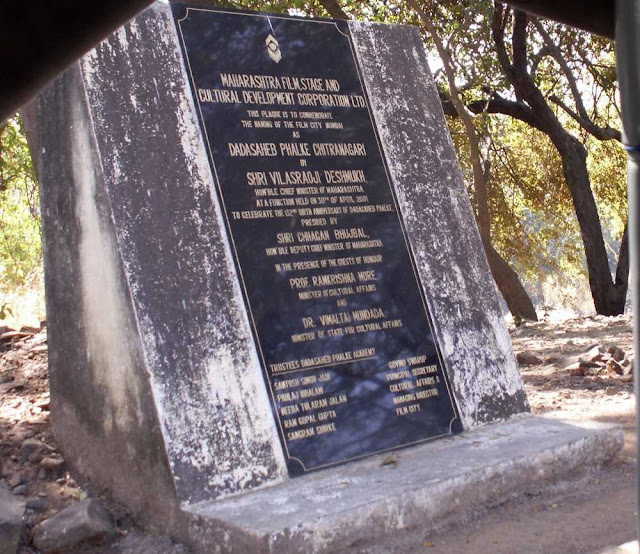
About mumbai film city

Film City, Mumbai  Located in a secluded area in the vicinity of Aarey Colony,  Mumbai , Film City is often regarded as a home ...