ad 1

Wednesday, July 10, 2013

7 Things You Should Know About Mount Everes

On May 29, 1953, Edmund Hillary and Tenzing Norgay completed the first confirmed ascent of Mount Everest, which stands 29,035 feet above sea level. Though the two mountaineers spent only about 15 minutes on the snow-covered summit, they managed to snap a few photos, share a celebratory hug and eat a bar of mint cake—an early version of today’s energy bars. Tenzing, a Nepalese Sherpa, also left some of the sweets as a Buddhist offering, and Hillary, a beekeeper from New Zealand, placed a cross nearby. On the 60th anniversary of their widely celebrated feat, which Hillary described as knocking “the bastard off,” here are seven things you may not know about Earth’s highest mountain.
Mount Everest
iStockphotos.com
1. No one knew of Everest as the roof of the world until the 19th century.
In 1802, the British launched what became known as the Great Trigonometrical Survey in order to map the Indian subcontinent. Heavy equipment, rugged terrain, monsoons, malaria and scorpions made the work exceedingly difficult. Nonetheless, the surveyors were able to take astonishingly accurate measurements. They soon proved that the Himalayas—and not the Andes, as previously believed—were the world’s highest mountain range. By 1852, they had fingered Everest, then called Peak XV, as the king of them all, and by 1856 they had calculated its height as 29,002 feet above sea level. A 1999 survey using state-of-the-art GPS technology found them off by only 33 feet. 2. Hillary and Tenzing might have been beat to the summit.
George Mallory, a British schoolteacher, participated in the first three documented attempts to scale Mount Everest from 1921 to 1924. Before the last of those expeditions, he wrote, “It is almost unthinkable…that I shan’t get to the top; I can’t see myself coming down defeated.” On June 4, 1924, a teammate made it within about 900 vertical feet of the summit before turning back. Mallory and climbing partner Andrew Irvine then made their own attempt for glory. They departed the 26,800-foot Camp VI on June 8 and were last seen that afternoon trudging upwards in their tweed coats, hobnailed boots and other primitive apparel. Some people believe that Mallory and Irvine reached the summit before dying on the way down. A camera they supposedly carried could perhaps solve the mystery, but it was not among the items in Mallory’s pockets when his corpse finally was discovered in 1999. Irvine’s body remains unfound.
3. Tenzing had almost reached the top once before.
After Mallory’s death, the next 10 or so expeditions to Mount Everest also failed. Tenzing gained valuable experience participating in six of them, starting off as a porter and later progressing into a full team member. In 1952 he and a Swiss climber came within about 800 vertical feet of the top—likely higher than anyone had ever gone. He broke his own record the next year by reaching the summit with Hillary. Since then, around 4,000 other mountaineers have likewise climbed Everest, including Hillary’s son and one of Tenzing’s sons.
4. Corpses are often left behind when a climber dies en route.
About 240 people have died attempting to climb Mount Everest. Avalanches, rockslides, blizzards, falls, altitude sickness, freezing temperatures, exhaustion and combinations thereof have all proven fatal, particularly in the so-called “death zone” above 26,000 feet. Since getting them down is grueling and dangerous, most of the corpses remain up there. They are well preserved in the snow and apparently serve as trail markers for climbers who pass by. Everest’s deadliest day occurred in May 1996, when eight people perished in a storm. Yet that incident, made famous by Jon Krakauer’s book “Into Thin Air,” did nothing to stem the tide of people willing to shell out tens of thousands of dollars for a chance to tame Earth’s highest mountain. Traffic jams have even been reported near the top, and a fistfight broke out this April between three European climbers and more than 100 Sherpas, over what the guides deemed to be rude and dangerous behavior during an attempted ascent. Meanwhile, the deaths keep coming, including at least 10 last year and around eight this year.
5. Everest’s litter problem goes well beyond cadavers.
As early as 1963, a climber wrote in National Geographic that parts of Mount Everest had become “the highest junkyard on the face of the Earth.” Empty oxygen bottles, human excrement, food packaging, broken climbing gear and torn tents continue to spoil the environment there. A single cleanup in spring 2011 removed over 8 tons of trash from Everest, and many more tons remain uncollected. In order to counteract the problem, Nepal’s government now requires climbers to bring back all of their equipment or risk losing a $4,000 deposit. New trash bins and a waste incinerator have also recently been installed near the mountain.
6. Few animals venture into Everest’s upper reaches.
Sagarmatha National Park, which includes Mount Everest and surrounding peaks, supports a variety of mammals at its lower elevations, from snow leopards and musk deer to red pandas and Himalayan tahr. About 150 bird species also reside within the park. Almost no wildlife, however, is found above 20,000 feet, the point at which permanent snow prevents even the hardiest lichens and mosses from growing. Among the exceptions are Himalayan jumping spiders, which have been observed as high as 22,000 feet, where they eat insects blown up by the wind; yellow-billed choughs, a crow-like bird, which have followed mountaineers up to about 26,500 feet; and bar-headed geese, which migrate over Mount Everest on their way from the Tibetan Plateau to India’s marshes.
7. Everest is the highest point from sea level, but other mountains are taller.
Mauna Kea, a volcano on Hawaii’s Big Island, tops out at 13,796 feet above sea level. But because it rises from the ocean floor, its base-to-summit height is actually more than 33,000 feet, making it, by that measurement at least, the tallest mountain in the world. Nor is Everest the closest to outer space. Because Earth isn’t a perfect sphere—it bulges at the middle—that honor belongs to 20,561-foot Mount Chimborazo in Ecuador.

history of mount everest

History
Mt. Everest has a great deal of history behind it. It was named after Sir George Everest, surveyor-general of India. On May 28, 1953 Sir Edmund Hillary and Tenzing Norgay were left behind by their companions. They hoped to be the first to climb the world's highest mountain. The next day they became the first people in the world to climb Mount Everest. They were only on the crown of the world for fifteen minutes before they had to step off the highest perch on earth.
Sir Edmund P. Hillary was a beekeeper from New Zealand. He was born in Auckland. His first attempt to climb Mt. Everest was in 1951 and 1952. The next year he reached the summit. Queen Elizabeth II knighted Hillary for his great achievement.

7 wanders Voting

Voting Analysis

Bernard Weber, Founder & President of New7Wonders, on the voting results
After 7 years of campaigning and 100 million votes received, the results of the world’s first-ever global vote were announced on July 7, 2007 (07.07.07) in Lisbon, Portugal. The canon of The Official New 7 Wonders of the World was announced during a spectacular gala show in the “Estadio da Luz,” the stadium of light, in the presence of 50,000 spectators and millions of television viewers throughout the world.

Videos

A little more then 2,200 years after the Ancient 7 Wonders (which represented buildings built over a period of 2,000 years) were declared in 200 B.C. by a single man, Philon of Byzantium in Athens, more than 100 million votes from people from every corner and country in the world, elected The Official New 7 Wonders of the World.
After 7 years of campaigning and 100 million votes received, the results of the world’s first-ever global vote were announced on July 7, 2007 (07.07.07) in Lisbon, Portugal. The canon of The Official New 7 Wonders of the World was announced during a spectacular gala show in the “Estadio da Luz,” the stadium of light, in the presence of 50,000 spectators and millions of television viewers throughout the world.
A little more then 2,200 years after the Ancient 7 Wonders (which represented buildings built over a period of 2,000 years) were declared in 200 B.C. by a single man, Philon of Byzantium in Athens, more than 100 million votes from people from every corner and country in the world, elected The Official New 7 Wonders of the World.
This truly new set of 7 Wonders covers, once again, the time span of 2,000 years—from the Arab city of Petra and the Roman Colosseum, both of which date from the 1st Century A.D., to the wide-armed statue of Christ Redeemer on Rio de Janeiro’s Corcovado mountain, built in 1931.
Following are some of my thoughts on the results of this first global vote in humankind’s history:
Allow me to start by taking something right off the top of your mind: No, not the Chinese, nor the Indian people have played the most weighty role in choosing the New7Wonders! They did not represent the largest group of voters. The children and young people of our world did.
For the first time ever, children could participate in a global election. They were the most numerous group of voters, since the Chinese have children, the Indians do too, Americans, Eu- ropeans, Africans—all of us, we all have children. Children up to a certain age do not have a strong national sense of pride, so they were our most objective voters, they voted for what they genuinely liked best.
In addition, it was not the case—as many had feared and wrongly predicted—that only the rich Western world and developed countries would dominate the list-making. Indeed, it was the rich, saturated and (as we saw time and again) more lethargic developed world that joined the proud, much more enthusiastic developing world to choose the New 7 Wonders of the World. Inter- estingly, at the very beginning of the cam- paign, in the year 2000, so seven years ago, the first wave of votes came from Turkey.
It seemed to me that people in developing societies use the Internet differently from us in the western, northern world of plenty. For them, it is the gateway to connect with the rest of the world. In our so-called privileged, developed world, the Internet is often used to surf, chat and/or consume content.
Reflecting the diversity of our world, there are three of the New 7 Wonders in Latin America, two in Asia, one in the Middle-East and one in Europe. They represent some of the most important civilizations of the past two millennia — Arab, Chinese, Inca, Indian, Mayan and Roman.
With the 7 (no more and no fewer) votes that people had to cast via our website, plus the opportunity to cast votes via text messaging or telephone, our voting system proved to be well balanced. Internet voting was the equalizing factor, while SMS and phone votes expressed the passion and strong feelings that people had for their favorite monument. As a result, some candidates received many Internet votes from all over the world without even engaging seriously in campaigning. This was the case with the Colosseum in Rome, the only wonder standing in old Europe, representing Roman civilization. Unexpectedly, the Alhambra in Spain did not enjoy public support when it came down to voting, despite a rigorous campaign supported by the King and the Prime Minister of Spain and great local activities, such as the creation of a human chain of 3,000 people embracing the ancient fortress.
The biggest surprise, however, came from Africa in the final phase of the election—a tremendous sprint in the last weeks before voting closed. Huge number of votes poured in supporting the African candidate in Mali: Timbuktu. Mali itself sent more votes in one single week than had the entire country of Germany up to then! This propelled Timbuktu from the bottom of the list to literally scratching the top 7! Had the organizers started campaigning just a month earlier, Timbuktu would have had a serious chance to be elected as one of The Official New 7 Wonders of the World.
More people from Korea and Japan voted for the Eiffel Tower than did people from France. Many children worldwide loved Neuschwanstein Castle, but the Germans didn’t. The United States, whose inhabit- ants voted very pass- ionately and in truly huge numbers, did not vote for their Statue of Liberty. Hundreds of thousands people send us comments and words of encouragement and often thus explained their choices. Some of these moving comments are listed after this report.
On a personal note, I am especially pleased to see that the two countries, Switzerland, where I was born, and Canada, whose citizenship I adopted as my second nationality, were amongst the most active participants without having their own candidates in the running together with some exotic countries like Yemen, Albania and Afghanistan.
This new list of 7 Wonders reflects quite accurately what economists predict as the upcoming economic and industrial regions in the world in the not-too-distant future: China, India and South America. I have asked myself: Could there be a connection between, on the one hand, the motivation and the pride, enthusiasm and the compassion that people have for their culture and monuments that symbolically represent them, and, on the other, their motivation to make a brighter future for themselves?
My response is: Yes, this is definitely the case and ultimately also the reason that cultural identity is so important to every single human being and to all societies on our planet!
My personal experience traveling, spending time and sharing life in different parts of the world taught me that people who are deeply rooted in their culture are more secure and, as such, fear the stranger, the unknown much less. Their own strong identity allows them to open up and appreciate differences, valuing the enriching experience with a stranger. It is the respect and appreciation of that which is different that forges the strongest friendship.
The New7Wonders Foundation will honor the 14 New7Wonders Finalist Candidates, together with The Official New 7 Wonders of the World, forever. They all deserve the acknowledgement of being outstanding finalists, since they are all icons in their own way, representing the best that people and civilizations have left behind for future generations to respect, honor and enjoy!

New7Wonders of the World

New 7 Wonders of the World (2000-2007) was an initiative started in 2000 as a Millennium project to choose Wonders of the World from a selection of 200 existing monuments The popularity poll was led by Canadian-Swiss Bernard Weber and organized by the New7Wonders Foundation based in Zurich, Switzerland, with winners announced on July 7, 2007 in Lisbon.
The New7Wonders Foundation claimed that more than 100 million votes were cast through the Internet or by telephone. The voting via Internet was limited to one vote for seven monuments per person/identity, via telephone multiple voting was possible, so the poll was considered not scientific ("decidedly unscientific"). According to John Zogby, founder and current President/CEO of the Utica, New York-based polling organization Zogby International, New7Wonders Foundation drove "the largest poll on record".
The program drew a wide range of official reactions. Some countries touted their finalist and tried to get more votes cast for it, while others downplayed or criticized the contest. After supporting the New7Wonders Foundation at the beginning of the campaign, by providing advice on nominee selection, the United Nations Educational, Scientific, and Cultural Organization (UNESCO) by its bylaws having to record all and give equal status to the world heritage sites distanced itself from the undertaking in 2001 and again in 2007.
The New7Wonders Foundation, established in 2001, relied on private donations and the sale of broadcast rights and received no public funding or taxpayers' money After the final announcement, New7Wonders said it didn't earn anything from the exercise and barely recovered its investment.
It was the first in a planned series of lists; in 2007 the foundation launched New7Wonders of Nature, which was the subject of voting until Nov. 11, 2011. New7Wonders Cities is the current project, with voting through July 2014

Wonder Location Image Year
Taj Mahal
ताज महल
تاج محل
Agra, Uttar Pradesh, India Taj Mahal 1632
Chichen Itza
Chi'ch'èen Ìitsha'
Yucatán, Mexico El Castillo being climbed by tourists 900
Christ the Redeemer
O Cristo Redentor
Rio de Janeiro, Brazil Christ the Redeemer in Rio de Janeiro 1926
Colosseum
Colosseo
Rome, Italy The Colosseum at dusk: exterior view of the best-preserved section 70
Great Wall of China
万里长城
Wànlǐ Chángchéng
China The Great Wall of china (Mutianyu section) BC 700
Machu Picchu
Machu Pikchu
Cuzco Region, Peru Machu Picchu in Peru 1438
Petra
البتراءAl-Batrā
Ma'an Governorate, Jordan The Monastery at Petra BC 312  


United Nations

In 2007 the New7Wonders Foundation contracted a partnership with the United Nations in recognition of the efforts to promote the UN's Millennium Development Goals". The UN posted on its website:
The New7Wonders campaigns aim to contribute to the process of uplifting the well being and mutual respect of citizens around the world, through encouraging interaction, expression of opinion and direct participation by voting and polling on popular themes and global issues which are understandable to everyone.
—United Nations Office of Partnerships
However, the United Nations Educational, Scientific and Cultural Organization (UNESCO), in a press release on June 20, 2007, reaffirmed that it has no link with the "private initiative". The press release concluded
There is no comparison between Mr. Weber's mediatised campaign and the scientific and educational work resulting from the inscription of sites on UNESCO's World Heritage List. The list of the 8 New Wonders of the World will be the result of a private undertaking, reflecting only the opinions of those with access to the Internet and not the entire world. This initiative cannot, in any significant and sustainable manner, contribute to the preservation of sites elected by this public.
—UNESCO

Egypt

This wonder of the world is the only surviving monument of the original Ancient Wonders. "This is probably a conspiracy against Egypt, its civilization and monuments", wrote editorialist Al-Sayed al-Naggar in a leading state-owned daily. Egyptian Culture Minister Farouq Hosni said the project was "absurd" and described its creator, Weber, as a man "concerned primarily with self-promotion". Nagib Aymin, an Egyptian expert on World Heritage Sites, has pointed out that "in addition to the commercial aspect, the vote has no scientific basis."
After the complaints from Egypt, the New 7 Wonders Foundation designated the Pyramids of Giza — the only remaining of the 7 Ancient Wonders of the World — as an Honorary New7Wonders Candidate, and removed them from the voting. The Pyramids of Giza therefore are the only Honorary Candidate of the New 7 Wonders of the World campaign and listed as one of the 21 Finalists.

Brazil

In Brazil there was a campaign Vote no Cristo (Vote for the Christ) which had the support of private companies, namely telecommunications operators that stopped charging voters to make telephone calls and SMS messages to vote Additionally, leading corporate sponsors including Banco Bradesco and Rede Globo spent millions of reals in the effort to have the statue voted into the top seven. Newsweek reports the campaign was so pervasive that:
One morning in June, Rio de Janeiro residents awoke to a beeping text message on their cell phones: "Press 4916 and vote for Christ. It's free!" The same pitch had been popping up all over the city since late January—flashing across an electronic screen every time city-dwellers swiped their transit cards on city buses and echoing on TV infomercials that featured a reality-show celebrity posing next to the city's trademark Christ the Redeemer statue.
—Elizabeth Dwoskin, Newsweek
According to an article in Newsweek, around 10 million Brazilians had voted in the contest by early July. This number is estimated as the New7Wonders Foundation never released such details about the campaign. An airplane message, with a huge inscription "4916 VOTE FOR CHRIST" flew in Rio de Janeiro for a month.

Peru

An intensive campaign led by the Peruvian Ministry of Commerce and Tourism in Peru had a great impact in the media and consequently Peruvian people voted massively for its national wonder. The announcement of the new World Wonders generated great expectation and the election of Machu Picchu was celebrated nationwide, especially in Cusco's main square and in Lima where President Alan García hosted a ceremony.

Chile

The Chilean representative for Easter Island's Moais, Alberto Hotus, said that the organizer Bernard Weber gave him a letter saying that the Moais had finished eighth and were morally one of the New Seven Wonders. Hotus said he was the only participant to receive such an apology.

India

A campaign to publicize the campaign in India gathered speed and it reached a climax in July 2007 with news channels, radio stations, and many celebrities asking people to vote for the Taj Mahal.

Jordan

Queen Rania Al-Abdullah of Jordan joined the campaign to back Petra, Jordan's national treasureDespite Jordan only having a population of under 7 million people, it has been claimed that over 14 million votes were made from the country. This number is estimated as the New7Wonders Foundation never released such details about the campaign.

Mexico

There was a campaign on the news programs to encourage people to vote for Chichen Itzá.[citation needed]

Criticism

Although N7W describes itself as a not-for-profit organization the company behind it – the New Open World Corporation (NOWC) – is a commercial business. All licensing and sponsorship money is paid to NOWC and correspondence sent to entrants uses the address of a Panama-based law firm.

Other finalists

The other 13 finalists, listed alphabetically, were:
WONDERS LOCATIONS PHOTOS YEAR
Acropolis of Athens Athens, Greece Acropolis of Athens 01361.JPG BC 447
Alhambra Granada, Spain Patio de los Arrayanes.jpg 889
Angkor Wat Angkor, Cambodia AngkorWat 20061209.JPG 1113
Eiffel Tower Paris, France Tour eiffel at sunrise from the trocadero.jpg 1887
Hagia Sophia İstanbul, Turkey Aya sofya.jpg 360
Kiyomizu-dera Kyoto, Japan Kiyomizu-dera beams1.JPG 1633
Moai Easter Island, Chile Ahu-Akivi-1.JPG 1250
Neuschwanstein Füssen, Germany Neuschwanstein castle.jpg 1869
Red Square Moscow, Russia Kremlin 27.06.2008 03.jpg 1561
Statue of Liberty New York, United States Statue-de-la-liberte-new-york.jpg 1886
Stonehenge Amesbury, England Stonehenge Total.jpg BC 2400
Sydney Opera House Sydney, Australia Sydneyoperahouse.JPG 1959
Timbuktu Timbuktu, Mali Timbuktu Mosque Sankore.jpg 1327
Big Ben London, England Clock Tower - Palace of Westminster, London - September 2006-2.jpg 1858

sameer singh picture


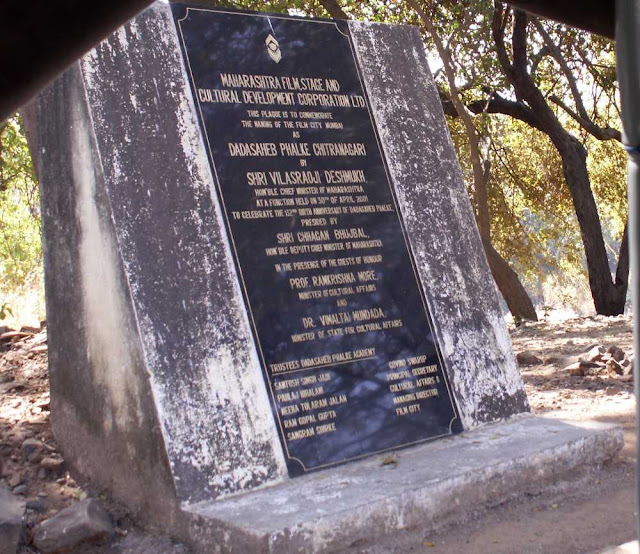
About mumbai film city

Film City, Mumbai  Located in a secluded area in the vicinity of Aarey Colony,  Mumbai , Film City is often regarded as a home ...